Olcay wrote about the importance of classroom interaction in language teaching, arguing for a focus on classroom interaction in initial teacher education and continuous professional development.
Stimulating discussions today during our data session, with participants from Sweden, Japan, the Netherlands, UK & US! We focused on online interactions during virtual exchange & discussed “relationship building” while practicing languages.
Interactional Competences and Practices in a Second Language (ICOP-L2) conferences aim to bring together researchers sharing a socially and interactionally situated view of language use, L2 learning and L2 interactional competence development. We hereby invite researchers at all career levels who draw on the principles of ethnomethodology, (multimodal) conversation analysis, membership categorization analysis, usage-based linguistics and related approaches to present their research on how L2/multilingual speakers engage in sense-making practices, how they accomplish language learning and teaching in and through multimodal interaction, how they develop their multimodal L2/multilingual interactional competence, and what they learn as they do so.
These are the main strands of the conference, but we are open to other contributions that cover interactional competences and L2 practices:
L2/multilingual interactional competence and its development
Multilingual interaction and L2 learning in classrooms and in the wild
Multimodality and materiality in L2/multilingual interactional competence across settings and across time
Multimodality and multilingualism in L2 teaching in and through interaction
Technologically mediated interaction, learning and teaching
Assessment of L2/multilingual interactional competence
The grammar-body interface in L2/multilingual interaction, learning and teaching
L2/multilingual interactional competence in professional settings, including L2 teacher education and development
Keynote speakers:
Olcay Sert, Mälardalen University
Kristian Mortensen, University of Southern Denmark
Klara Skogmyr-Marian, Stockholm University
Hanh T. Nguyen, Hawai’i Pacific University
Pre-conference workshops (June 4-5, 2024):
Three pre-conference workshops, aimed especially but not exclusively at young researchers, will provide hands-on training in transcribing and visualizing interactional video-data (workshop 1), in analyzing the role of materiality in multilingual, interactional data (workshop 2), and in opening the doors of institutional language learning and teaching environments to the outside world (workshop 3). It is possible to attend all three workshops. Registration will be on a first-come-first-served basis.
Workshop 1
Workshop 2
Workshop 3
Data visualization and transcriptionThis workshop tackles data visualization and transcription issues faced by interaction analysts working with video-data. By way of introduction, Johannes Wagner will go through the history of our field and show how the development of analytic understandings, methods and tools for data-representation has been driven by an expansion into new types of data. Then, the workshop will split into two parallel hands-on workshops, one led by Jacob Davidsen (JD) and one led by Nathalie Schümchen (NS). JD will introduce DOTE, a recently designed transcription software for video-data, and try out its functions with the workshop participants. NS will discuss and show ways to visualize movement and aspects of materiality in and alongside transcription of bodily and verbal resources. Facilitators: Johannes Wagner (University of Southern Denmark), Jacob Davidsen (Aalborg University), Nathalie Schümchen (Tampere University).
Materiality of interactionThis workshop focuses on ways in which materiality (e.g., objects, spaces, and physical environments) matters for the progressivity of interaction in L2 and multilingual contexts. We will explore the role of materiality in organizing co-operative action (Goodwin 2018, Day & Wagner 2019) and analyze examples from a range of contexts (e.g., workplace settings, cooking classes, and different physical activities). The workshop will be interactive and give newcomers to multimodal CA a chance to present and discuss examples from their own data with the aim of easing their way into a complex analytical area that is gaining interest in our field. A selection of pre-readings will also be discussed.Facilitator: Niina Lilja (Tampere University)
Rewilding language educationThis workshop discusses an approach that interfaces formal education with the exploration of and participation in more naturalistic communicative contexts, coupled with feedback and instructor mediation. “Rewilding” language education involves reverse engineering from studies of learning in the wild to augment and restore a diversity of real-world activities and interactional affordances into instructional curricula. The “rewilding approach” to instructed language education addresses the challenge of how to dynamically integrate formal learning settings with the vibrancy and diversity of linguistic, experiential, and situational contexts out in the world. The workshop will lay out the epistemological foundations of rewilding education before moving on to discussing examples and issues brought into the workshop by participants. Facilitator: Steve Thorne (Portland State University)
Submission Guidelines:
The deadline for submissions is December 1, 2023. Submissions should be made through the conference website (TBA).
Individual papers:
Paper presentations will be allocated a maximum of 30 minutes, including questions, following the typical “20+10” format. The maximum length of the abstracts for individual paper proposals (for one or more authors) is 300 words, excluding references. There is a limit of one first-authored paper per person.
Panel proposals (colloquia):
Limited places will be allocated to two-hour panels (colloquia), which are centered around a theme related to the conference. A colloquium proposal should include an abstract (500 words max), describing the theme and outlining how the individual contributions illuminate the theme. Abstracts of the individual presentations (300 words max) must be included in the same submission in the proposed order of presentation. Organizer(s) are responsible for managing the time (two hours) allocated to the full colloquium and to each presentation. In case of more colloquium proposals than can be accommodated in the programme, the individual abstracts may be considered for inclusion in the conference as paper or poster presentations.
Posters:
There will be time slots dedicated to poster presentations. The maximum length of the abstracts for posters should be 300 words, excluding references. Abstracts should clearly describe the methodology, context, the kinds of data used, and analytic findings.
Important dates:
September 1, 2023 Submission opening
December 1, 2023 Submission deadline
February 1, 2024 Notification of acceptance/rejection
February 15, 2024 Registration opens
April 15, 2024 Registration deadline
June 4-5, 2024 Pre-conference workshops
June 5-7, 2024 Conference
New in 2024: ICOP-L2 will be held back-to-back with the 5th edition of the thematically related international conference series Thinking, doing, learning: Usage based perspectives on second language learning (find the Call for Papers here). Information about this and other conference-related matters (abstract submission, registration, programme etc.) and news will be announced on www.icopl2.org.
Apologies for a change in our list of data sessions. Marwa Amri will not be able to present her data on the 4th of May. Instead, we will have an online data session with Betül Çimenli (Visiting researcher, Newcastle University) on the 4th of May at 13:15 (Central European Time). Betül will present an extract from her corpus of task based dyadic interactions in a virtual exchange environment. The session will be held online only on Zoom. Please send a message to olcay.sert [at] mdu.se to receive the link and the password. We look forward to seeing you on the 4th of May!
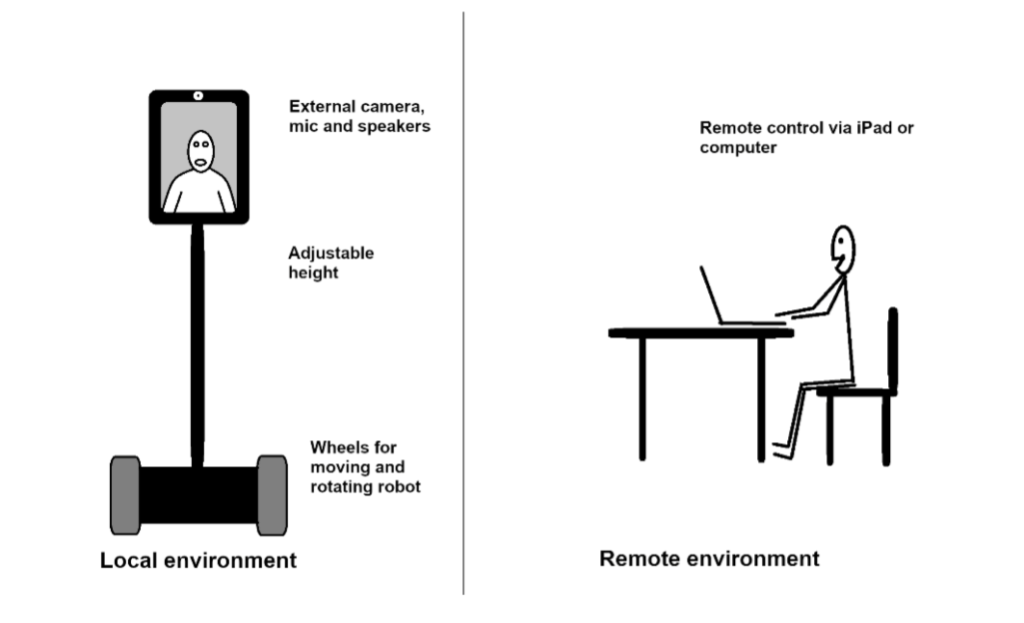
In our next data session, our visiting researcher Teppo Jakonen (University of Turku, Finland) will present a sequence from his database of interactions between telepresence robots and language learners in classrooms. The session will take place in Västerås (see below for details), but those who want to attend online can do that via Teams. Please get in touch with Olcay Sert if you want to attend online.
———————
30 March:
Teppo Jakonen (University of Turku)
Telepresence robots in language classrooms
U3-083 (Västerås), 13:15-14:45
———————
Jakonen, T., & Jauni, H. (2022). Telepresent Agency: Remote Participation in Hybrid Language Classrooms via a Telepresence Robot. In New Materialist Explorations into Language Education (pp. 21-38). Cham: Springer International Publishing.
MIND research group hosts 5 data sessions with data from a range of contexts: oral proficiency exams in Czechia, post-observation meetings after mathematics and language classrooms, telepresence robots in language classrooms in Finland, corpus-based professional development meetings, and project-work in Swedish classrooms. Get in touch with us if you want to take part in our sessions!
———————
16 February:
David Ryška (Hradec Králové University)
English as a Foreign Language oral proficiency exams in Czechia
U3-083 Västerås, 13:15-14:45
———————
9 March:
Maria Larsson, Annaliina Gynne (Mälardalen University)
Video-based reflections on understanding-checks in mathematics and language classrooms
U3-104 Västerås, 14:15-15:45
———————
30 March:
Teppo Jakonen (University of Turku)
Telepresence robots in language classrooms
U3-083 (Västerås), 13:15-14:45
———————
13 April:
Olcay Sert, Thorsten Schröter, Elisabeth Wulff-Sahlén (Mälardalen University)
Data-driven reflections in online professional development meetings
In progressing through schooling, students face the challenge of reading increasingly complex texts. In science teaching, students need to decipher the meaning of technical vocabulary and consider the relationship between verbal text and multimodal elements, such as images, graphs, and models. Many scholars and teachers view it as a matter of social justice to give all students, regardless of their social and linguistic background, the necessary tools to engage with subject-specific texts and concepts. However, views differ on how this is best achieved. Some promote the value of reading strategies that can be used across the curriculum, while others argue that the teaching of literacy skills must reflect disciplinary differences. Previous studies have studied positive effects of infusing reading strategies in science teaching. However, little is known about how teachers’ enactment of reading strategies impacts the way science texts are talked about and jointly negotiated in the on-going practice of teaching. Therefore, I used audio recordings, field notes and photographs to document a grade 4 teacher’s enactment of reading strategies in discussions about science texts throughout 10 weeks. The school was located in a linguistically diverse and socioeconomically disadvantaged area in Sweden. I was interested in how the strategy teaching seemed to align with content learning goals.
The strategies were mostly employed on texts in two well-known science textbooks. The teacher presented the strategies to the students and asked them to practice them in whole-class discussions about the texts. The first strategy the teacher focused on was using text knowledge to support the reading. While knowledge about different genres and linguistic patterns can be a powerful tool for reading, the teacher mostly contrasted the factual texts encountered in the textbook with fictional texts read in language arts lessons. It followed that the discussions based on this strategy highlighted some general feature of factual texts, such as headings guiding the reader by pointing out specific content. However, building on the broad categories of fictional and factual texts meant that the discussions did not touch on the different types of texts used for storing knowledge in the textbooks, such as explanations of processes in physics (e.g., different states of matter) and reports about classes of animals in biology (e.g., molluscs).
The second strategy entailed looking closely at different text features, such as images, headings and words marked with bold fonts. Since these features often represented or illustrated core concepts, such as states of water (physics) and different kinds of animals (biology), this strategy entailed discussions more focused on relevant disciplinary content. However, these discussions were still strongly shaped by the enactment of reading strategies. An example a textbook spread is displayed below, which deals with different states of water.
Figure 1 Persson, H. 2015. Boken om Fysik och Kemi. [The Book about Physics and Chemistry]. Stockholm: Liber, pp. 18-19
In the discussions about text features, the teacher mostly asked the students to focus on one page. In relation to the above spread, it meant that students commented on the images on the left side which illustrated water in solid and liquid state. They had contradicting thoughts on how useful these images to illustrate the concepts and commented on the fact that “vapor”, the third form, was not visually represented. The students were not asked to pay attention to the right part of the spread which represented vapor by means of a kettle. More importantly, the one-sided reading meant that the abstract model on the left page, representing the transformation between different states, was not discussed. In textbook spreads of this kind, it is common to first introduce concepts in familiar, down-to-earth manner (left side) and then recast them in a technical way (right side). Understanding such shifts between everyday and specialised ways of representing phenomena is crucial to develop knowledge in science. The isolated focus on specific parts of the text material appeared counterproductive in this respect.
What do these findings tell us?
The study revealed and exemplified challenges in infusing generic reading strategies in science teaching. The focus on strategies, general properties of factual texts, and isolated parts of the text material reduced the possibilities to expand on the scientific concepts in the classroom discussions. However, asking the students to pay attention to the function of different text elements, such as headings and images appeared valuable given the multimodal nature of science texts. The study shows the potential of asking the students to consider how key concepts, such as different states of matter, are represented in different ways. A close attention to the metaphors, everyday contexts, and models used to convey disciplinary knowledge is a reading strategy well worth promoting. Furthermore, the strategy of using text knowledge could be strengthened by making a finer distinction between genres, including their ways of drawing on visual and verbal resources to communicate concepts and processes in science.
Our next data session will take place on the 1st of December at Mälardalen University, Västerås (U3-104) at 13:15. Merve Bozbıyık (Universidad Autónoma de Madrid) will share data on Peer Interaction in breakout rooms in an online EMI classroom. During the session, an extract based on a collaborative group activity in an online Psychology course will be explored.
Bio: Merve Bozbıyık is a visiting doctoral researcher at Universidad Autónoma de Madrid and a PhD candidate at Hacettepe University. Her research interests involve investigating online and face-to-face classroom interaction, English Medium Instruction, and teacher education using Multimodal Conversation Analysis.
As life-long-learning initiatives have spread around the world, there are now more language courses offered to older-adults. However, we know very little about the interactional dynamics of classrooms in which older-adults learn languages. In this guest blog post, researcherMara van der Ploeg (University of Groningen, the Netherlands) and her colleagues share their research findings on the interactional dynamics in classrooms where older adults have been learning English. The researchers specifically focused on questions the learners ask. The full text of the research article is available open access, and can be downloaded using this link. Please scroll down for a short, accessible summary.
—————————————————————————————
As the world is ageing and people age more healthily, older adults have more time and opportunities to enjoy and pick-up new hobbies. One of those hobbies might be learning a new language. Despite the widespread belief that older adults cannot learn languages anymore (or at least not as easily as younger learners), research has shown that this is very much possible and that seniors also enjoy learning languages. Moreover, it has been suggested that learning a language later in life might contribute to healthy ageing by delaying the onset of age-related illnesses such as Alzheimer’s. When it comes to the older adult language learning classroom and classroom interaction, however, next to nothing is known. Therefore, we investigated language-related questions seniors asked during an English course in the Netherlands to gain insight into older adults’ language learning practices. 7 Dutch seniors (65+) participated in this English course specifically developed for, and targeted towards, seniors. After video-recording, transcribing and analysing their classroom interaction, we identified three different categories of language-related questions.
The first category of questions we identified are production-oriented questions. These are questions about the pronunciation or translation of a word or sentence that need to be answered (i.e., a question on vocabulary: ‘what is X in English?’) before the teacher and the students can continue with the lesson. Interestingly, the older adult asking the production-oriented question does not only address the teacher but directs the question towards the other learners as well. It is, however, the teacher who provides an answer to the question.
Secondly, we identified comprehension-oriented questions: questions regarding something someone else has said but that is not understood by the listener (i.e., ‘what does X mean?’). While in production-oriented questions both the teacher and other learners are addressed, in comprehension-oriented questions only the teacher is addressed. And where it is only the teacher answering production-oriented questions, other learners can also answer comprehension-oriented questions. Below we have provided an example of a production-oriented question and a comprehension-oriented question.
Production-oriented question:
(The class discusses pronunciation of the letters in the alphabet; Loes asks for the English translation (‘so’) of the Dutch word ‘dus’ in order to produce her next utterance)
Loes:
Dus, dus, what is dus? (translation: so, so, what is so? & looks around the room)
Teacher:
So.
Loes:
So it’s a b c d (continues listing the alphabet).
Production-oriented questions
Comprehension-oriented question:
(The class does a speaking exercise in pairs where they play the role written on the card handed to them; Koen asks the meaning of ‘stepmother’ in order to play his role)
Koen:
We have a question, what is a stepmother?
Loes:
Stiefmoeder (translation: stepmother)
Teacher:
Can you try to describe it?
Loes:
I am the second wife of Koen, and his children, I am the stepmother.
Teacher:
So they are the stepchildren.
Koen:
Step ah okay.
Comprehension oriented questions
Finally, we found a great number of wonderment questions: questions that are not necessary for the activity at hand but that learners wonder about nonetheless (e.g., ‘are X and Y synonyms?’). They operate more on a meta-level and were actually the most common type of learner questions in our dataset. Unlike the two other categories, wonderment questions are mainly directed towards the teacher and also answered by the teacher. The other learners do, however, join in the conversation by acknowledging the answer provided by the teacher. An example of a wonderment question can be found below.
Wonderment question:
(The teacher explains question types; Pim does not need the answer to his question for the task at hand)
Pim:
Could I ask a question, what is the difference when you say ‘do you play tennis’ or ‘are you playing tennis’?
Teacher:
‘Are you playing tennis’ means right now.
Cees:
Oh yeah
Pim:
Yes, of course.
Wonderment questions
What do these results tell us?
Our study shows that (1) older adults mainly ask wonderment questions and that (2) they often turn the interaction into a multi-party interaction. While classroom interaction is usually teacher-fronted and typically involves the teacher and one learner, senior language learners include other learners in these interactions as well. Together, these two findings show that older adults display agency over their own learning process by inserting their own agendas into the interaction. Language teachers can use this ownership to allow and stimulate wonderment questions and multi-party interaction to enhance seniors’ language learning process. This can be done by explicitly inviting other learners to answer their peers’ questions and including discussion activities that create more room for the older adults to ask their questions.
We are soliciting manuscripts for an edited volume on conversation analysis as a change agent in language teacher education. Over the last decade, conversation analytic (CA) findings from classroom discourse studies have started feeding into language teacher education contexts, yielding a number of CA-based teacher training frameworks such as SETT (Walsh 2013), IMDAT (Sert, 2019) and FAB (Waring & Creider, 2021). We have now reached a tipping point of grappling with or groping for the material impact of CA in the actual language classrooms around the world. In particular, we are interested in studies that document practice-based changes (e.g., change in teacher practices in the classroom and in reflective practices) in which CA plays a role. We realize that such CA-informed “interventions” can come in many shapes and forms and welcome a multitude of endeavors and innovations.
Should you be interested in participating in such a project, please send us a 300-word abstract byDecember 5, 2022 that describes (1) the context of the study, (2) the specific role CA plays as a change agent, and (3) the types of changes (to be) documented. Decisions for possible inclusion in the volume will be sent out by December 15, 2022, with submissions of first drafts due by July 1, 2023.



![Figure 1 Persson, H. 2015. Boken om Fysik och Kemi. [The Book about Physics and Chemistry]. Stockholm: Liber, pp. 18-19](https://mindresearchgroup.org/wp-content/uploads/2022/12/picture1.png?w=762)


 Mälardalen INteraction & Didactics (MIND) Research Group